
🌱 A Moment of Presence
Before we begin, I’d like to invite you to pause for a moment.
Notice where your body is making contact with the chair beneath you.
Take one slow, comfortable breath.
There is nothing to change. Nothing to achieve. Simply notice what it’s like to be here, right now.
Now, let’s begin.
Have You Ever Felt Like You’re Living on Autopilot?
Have you ever arrived somewhere and realized you barely remembered the drive?
Or looked down to discover your meal was gone before you really tasted it?
Perhaps you’ve been walking, making your morning coffee, or talking with someone you care about while your mind was already planning tomorrow. Your body was there, but your attention was somewhere else entirely.
If any of this feels familiar, you’re not alone.
In today’s fast-paced world, many of us spend much of our lives moving from one task to the next—checking notifications, juggling responsibilities, replaying conversations, or planning what’s next. We become so accustomed to living in our thoughts that we gradually lose touch with the simple experience of being present in our own bodies.
This isn’t a personal failure, and it doesn’t mean something is wrong with you. It’s a natural response to busy schedules, constant distractions, and the pace of modern life.
Embodiment offers a gentle invitation to return.
At its heart, embodiment is the practice of reconnecting with your lived experience—with your breath, your body, your senses, and the present moment. It isn’t about becoming someone different or achieving a perfect state of calm. It’s about learning to notice what has been there all along.
The good news is that this journey doesn’t begin with complicated techniques, expensive retreats, or hours of meditation.
It begins with something much simpler.
It begins by noticing.
What Does Embodiment Actually Mean?
If you’ve never heard the word embodiment before, it can sound like a complicated idea. In reality, it’s much simpler than it appears.
At its heart, embodiment is the practice of coming home to your own experience. It’s learning to experience life through your body as well as your thoughts, becoming more aware of what is happening within and around you in the present moment.
It might be the feeling of your feet resting on the floor.
The warmth of a cup of tea in your hands.
The gentle rise and fall of your breath.
The tension you’ve been carrying in your shoulders without even realizing it.
Or the quiet sense of relief that comes from taking one slow, intentional breath.
These small moments may seem ordinary, but they gently invite us back into direct experience. Rather than constantly replaying the past or anticipating the future, embodiment encourages us to reconnect with what is happening right now.
This doesn’t mean you stop thinking or clear your mind. Our thoughts are an important part of who we are. Embodiment simply reminds us that our thoughts are only one part of our experience. Our bodies are constantly communicating with us through sensations, breath, movement, and emotion.
That communication isn’t there to judge us or tell us we’re doing something wrong. It’s simply inviting us to pay attention with curiosity and compassion.
Many people imagine that embodiment requires years of meditation, advanced yoga poses, or elaborate spiritual practices. It doesn’t.
It begins in surprisingly ordinary ways.
Feeling your feet on the floor before standing up.
Taking one slow breath before answering an email.
Pausing long enough to truly taste your first sip of coffee or tea.
Noticing the warmth of the sun on your face.
Listening to the sound of rain outside your window.
These quiet moments may seem small, but they help us return to ourselves—one breath, one sensation, one moment at a time.
You don’t need special training to begin.
You simply need a willingness to notice.
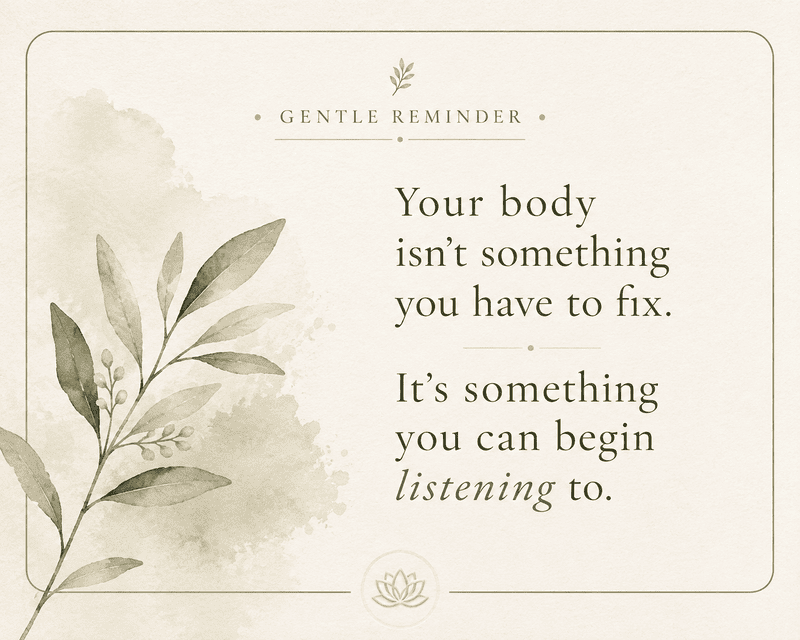
Why Do So Many of Us Feel Disconnected?
If you’ve ever felt disconnected from your body, you’re certainly not alone.
Modern life asks a great deal of our attention. Our days are often filled with responsibilities, notifications, conversations, deadlines, errands, and the constant stream of information flowing through our phones and computers. We move quickly from one task to the next, often reaching the end of the day without remembering whether we truly paused to experience any of it.
Many of us have become incredibly skilled at thinking, planning, organizing, and solving problems. These are valuable abilities, and they help us navigate our daily lives. But when our attention is always focused on what’s next, it’s easy to lose touch with what’s happening right now.
We eat lunch while answering emails.
We listen to podcasts while walking the dog.
We scroll through our phones while waiting in line.
We fall asleep thinking about tomorrow before today has even had a chance to settle.
None of these habits make us “bad” at being present. They simply reflect the world we live in. Our minds are constantly being invited in a hundred different directions, so it’s only natural that we sometimes feel disconnected from ourselves.
The good news is that reconnecting doesn’t require a dramatic life change. You don’t have to throw away your phone, move to a quiet cabin, or meditate for an hour every morning.
It begins with something much gentler.
Noticing one breath before opening your inbox.
Feeling your feet on the ground while waiting for the coffee to brew.
Taking a brief pause before moving on to the next task.
These small moments of awareness remind us that presence isn’t about doing everything perfectly. It’s about returning, again and again, to the experience of being here.
Awareness—not perfection—is where embodiment begins.
And every moment offers another opportunity to come home to yourself.

What Embodiment Is (and What It Isn’t)
One of the biggest misconceptions about embodiment is that it’s something you have to master.
It isn’t.
Embodiment isn’t about reaching a perfect state of calm or becoming someone who never feels distracted, stressed, or overwhelmed. It isn’t about emptying your mind, forcing yourself to relax, or trying to perform the “perfect” mindfulness practice.
Life will still be busy. Some days your mind will race. You’ll have moments when you feel anxious, distracted, tired, or emotionally stretched.
That doesn’t mean you’ve failed.
It simply means you’re human.
Embodiment isn’t about avoiding those experiences. It’s about meeting them with curiosity instead of judgment.
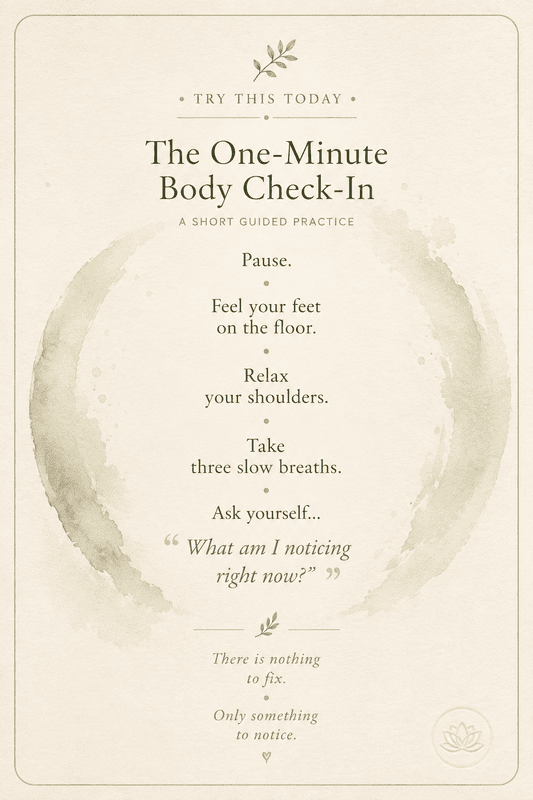
Rather than asking yourself, “How do I make this feeling go away?” you begin to ask, “What am I noticing right now?”
Perhaps you notice your shoulders have become tense.
Maybe your breathing has become shallow.
Or perhaps you realize you’ve been holding your jaw tightly all afternoon.
These moments aren’t problems to solve.
They’re invitations to reconnect with yourself.
Over time, embodiment becomes less about trying to control your experience and more about learning to be present with it.
Sometimes it looks like noticing your breath.
Sometimes it looks like slowing down for just a moment.
Sometimes it looks like taking one conscious breath before responding.
Sometimes it looks like giving yourself permission to sit with a difficult emotion before trying to change it.
Sometimes it looks like simply allowing yourself to be exactly where you are today.
You don’t have to be “good” at meditation.
You don’t have to force yourself to relax.
You don’t have to silence every thought.
You only need to begin where you are today.
Every moment of noticing is already a moment of practice.
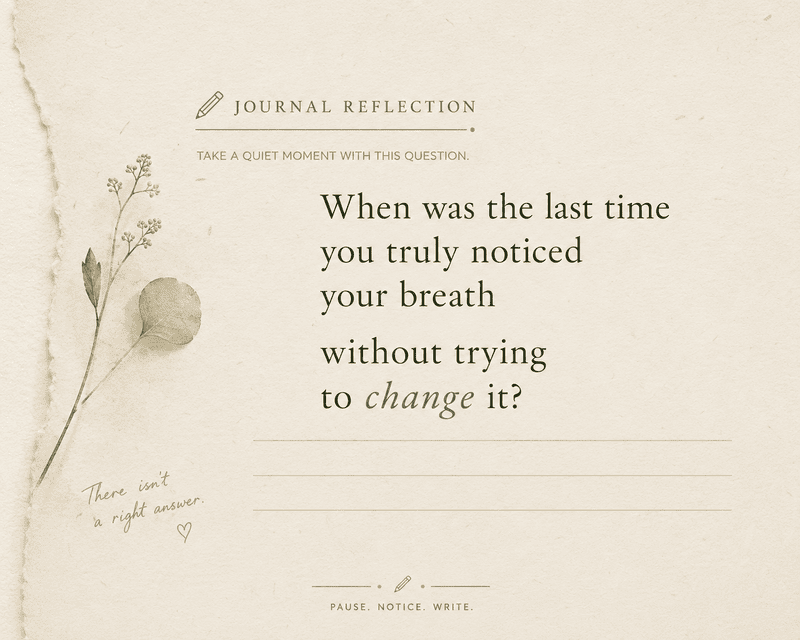
Five Gentle Ways to Practice Embodiment Today
One of the most reassuring things about embodiment is that it doesn’t require special equipment, a perfect environment, or hours of free time. It begins in the ordinary moments that are already part of your day.
Think of these as gentle invitations rather than another list of things to accomplish.
Here are five simple places to begin.
1. Notice Your Breath for One Minute
You don’t need to change your breathing or make it deeper. Simply notice it.
Where do you feel your breath most clearly? In your chest? Your belly? The gentle flow of air through your nose?
Spend one minute observing the natural rhythm of your breath without trying to improve it.
Often, simply paying attention is enough to help us feel a little more grounded.
2. Feel the Ground Beneath You
Whether you’re standing in the kitchen, waiting in line, or brushing your teeth, pause for just a moment and notice the quiet support beneath you.
Feel the weight of your body.
Notice the pressure beneath your feet.
Allow yourself to experience the simple feeling of being supported by the ground.
Sometimes the smallest moments are the ones that bring us back to ourselves.
3. Enjoy Your Morning Coffee or Tea Without Distractions
Before reaching for your phone or turning on the television, spend the first few moments of your morning simply enjoying your drink.
Notice the warmth of the mug in your hands.
The aroma.
The first sip.
Perhaps even the curl of steam rising into the morning air.
You don’t need to rush through the experience. Allow yourself to be fully present with this small daily ritual.
4. Pause Before Reaching for Your Phone
Our phones often become the first place our attention goes.
The next time you instinctively reach for it, pause for one slow breath first.
Notice how you’re feeling.
Are you bored?
Looking for a distraction?
Hoping for a moment of connection?
There isn’t a right or wrong answer.
The practice is simply becoming aware of the moment before the habit takes over.
5. Take a Slow Walk and Notice Your Surroundings
Whether you’re walking through your neighborhood, a nearby park, or simply to your car, invite yourself to slow down just a little.
As you walk, gently notice five things around you.
Perhaps it’s the warmth of the sunlight.
The sound of birds in the distance.
The movement of the trees.
The feeling of the breeze against your skin.
Or the quiet rhythm of your own footsteps.
The goal isn’t to create the perfect mindful walk.
It’s simply to remember that you’re here.
Right now.
Exactly where life is happening.
The more often you return to these small moments, the more familiar they become.
Over time, embodiment stops feeling like something you have to practice.
It begins to feel like a quieter, more intentional way of moving through everyday life.
You don’t have to practice embodiment perfectly.
You simply have to keep noticing.
Every ordinary moment holds the possibility of becoming a moment of presence.

What Does Embodiment Have to Do With Tantra?
If you’ve been reading this article and wondering what embodiment has to do with Tantra, the answer is beautifully simple.
Within Harmony Tantra, embodiment is one of the foundations of how we approach the practice.
While Tantra is often misunderstood or reduced to a single aspect of the tradition, its deeper teachings invite us to cultivate greater awareness, presence, and connection—both with ourselves and with the world around us.
That journey begins by learning to be present in our own experience.
Before we can deepen our breath, create meaningful rituals, or cultivate more intentional relationships, we first learn how to notice.
We notice the rhythm of our breathing.
We notice the sensations within our bodies.
We notice our thoughts without becoming completely consumed by them.
We notice the simple experience of being alive in this moment.
This is why embodiment isn’t separate from Tantra—it is one of the ways we begin experiencing it. Rather than asking us to become someone different, it gently invites us to return to ourselves, one moment at a time.
The beautiful thing is that you don’t have to wait until you feel perfectly calm, confident, or experienced before you begin.
Every moment of noticing is already a step toward greater presence.
And every moment of presence becomes an opportunity to deepen your relationship with yourself.
The deeper practices of Tantra don’t begin somewhere else. They begin right here—with your next breath, your next moment of awareness, and your willingness to be present.
✨ Continue Your Journey
If today’s article resonated with you, there are several gentle ways to continue exploring. There’s no need to do everything at once, and there is no perfect pace. Simply choose the next step that feels most supportive to you.
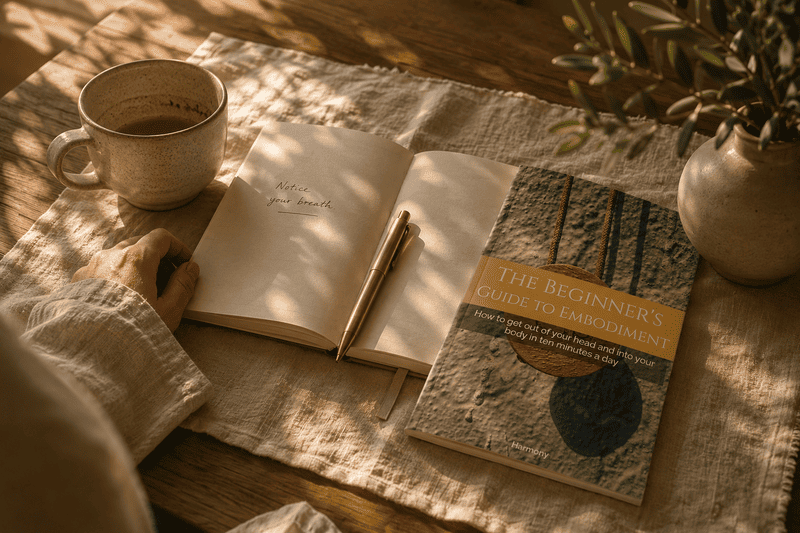
📘 Go Deeper with The Beginner’s Guide to Embodiment
If you’d like to explore embodiment in more depth, The Beginner’s Guide to Embodiment expands on the ideas introduced here with guided practices, thoughtful reflections, and simple exercises designed to help you build a more connected relationship with your body and the present moment.
Whether you’re just beginning your journey or simply looking for more guided support, it’s designed to meet you where you are.
→ Explore The Beginner’s Guide to Embodiment
🌿 Download the Free Guide
If you’re new to Harmony Tantra, 7 Simple Steps to Everyday Tantra is a wonderful place to begin.
Inside, you’ll discover simple, approachable practices that help you cultivate greater awareness, presence, and connection—one small step at a time.
📖 Read Next
If today’s ideas sparked your curiosity, you might also enjoy:
The Simplest Way to Begin Tantra (Even If You’ve Never Tried It Before)
A gentle introduction to the everyday practice of Tantra through awareness, breath, and presence.
Wherever you choose to continue, remember that the practice doesn’t begin when you finish reading.
It begins the next time you pause.
The next time you notice your breath.
The next time you feel your feet on the floor.
The next time you allow yourself to be fully present, even for just a moment.
Because every moment of presence is already part of the journey.
Closing Thoughts
Embodiment isn’t about becoming someone different.
It’s about becoming more present with the person you already are.
It’s an invitation to remember that beneath the busyness, the responsibilities, the constant thinking, and the endless distractions, there is always a place within you that can return to the present moment.
You don’t have to wait until life becomes quieter.
You don’t have to find the perfect routine.
You don’t have to feel completely calm before you begin.
You can begin exactly where you are.
Perhaps it starts with noticing your next breath.
Perhaps it’s feeling your feet on the floor as you stand up.
Perhaps it’s pausing for a moment before taking the next sip of your morning coffee or tea.
These moments may seem small, but they have a quiet way of changing how we experience our days. One gentle pause becomes another. One moment of awareness leads to another.
Over time, embodiment begins to feel less like something you practice and more like a quieter, more intentional way of moving through everyday life.
Wherever you are today, remember that there is no finish line and no perfect way to practice embodiment.
There is only this moment.
And the next.
And another opportunity to return to yourself.
Before you continue with the rest of your day, pause for one slow breath.
Notice where your body is right now.
Feel your feet on the floor.
Take one gentle breath.
And remember…
You’ve already begun.